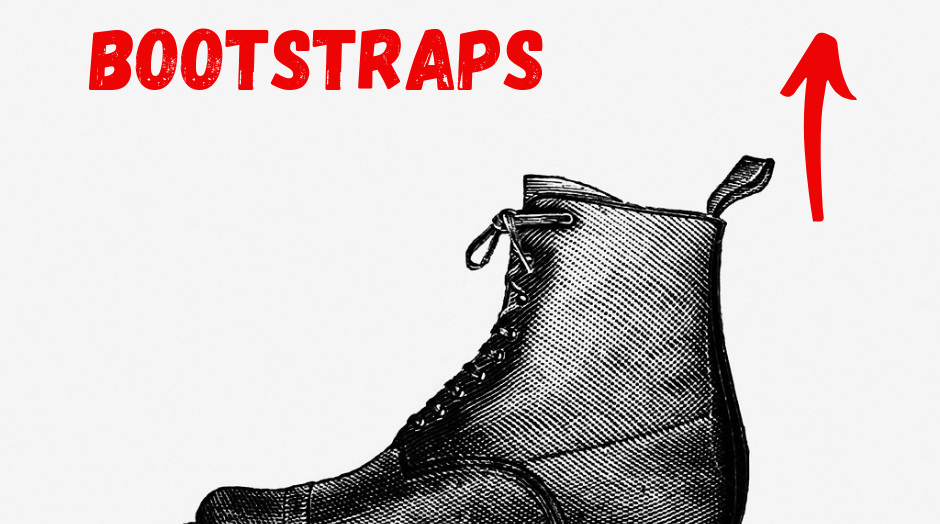
The phrase "pull yourself up by your bootstraps" originated shortly before the turn of the 20th century. It's attributed to a late-1800s physics schoolbook that contained the example question "Why can not a man lift himself by pulling up on his bootstraps?" So when it became a colloquial phrase referring to socioeconomic advancement shortly thereafter, it… Continue reading The Origins of the Phrase “Pull Yourself Up By Your Bootstraps”

Author: Jess Zafarris
Why “Sinister” and “Dexterous” Go Hand-in-Hand
Did you know that "sinister" and "dexterous" are opposites? (Etymologically speaking, at least.) The word "sinister" comes from the Latin sinister, or "left." Because most people were right-handed, the left side was associated with weakness, bad luck, malice, and darkness (or sunset / the West), while sinister's opposite, dexter ("right") was associated with strength and… Continue reading Why “Sinister” and “Dexterous” Go Hand-in-Hand
On the Etymology of “Palindrome” and Other Forms of Wordplay
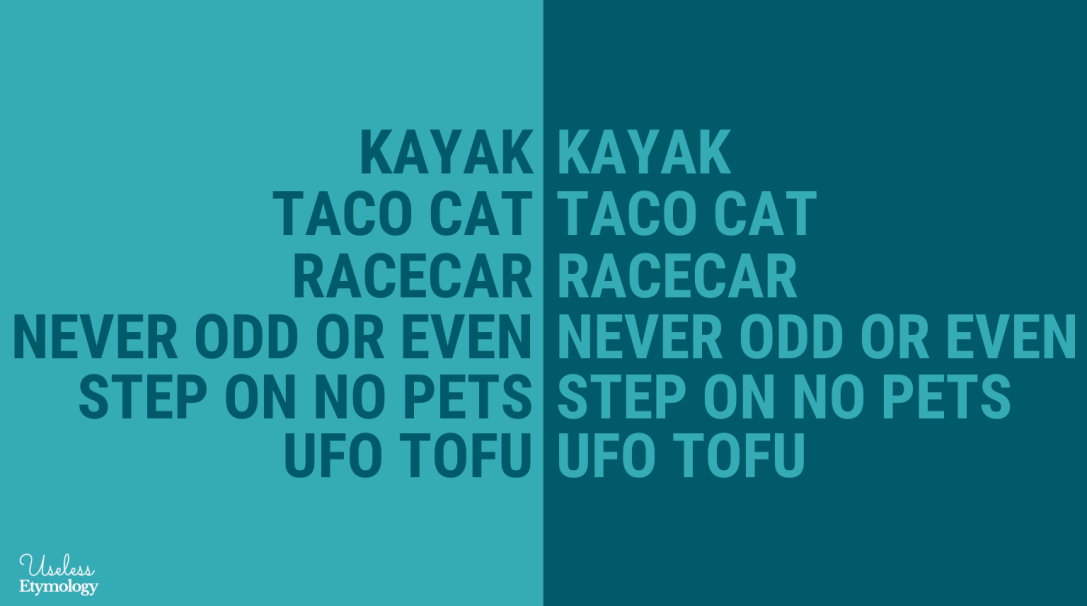
A palindrome, as you likely know, is a word or phrase that reads the same backward and forward (KAYAK, ROTATOR, CIVIC). The word literally means "a running back," or "a running again" from the Greek palin, meaning "back, again," and dromos, meaning "a running. Dromos is also the source of "dromedary," a one-humped camel known… Continue reading On the Etymology of “Palindrome” and Other Forms of Wordplay
Movies, Jukeboxes, and Demons: The Etymology of “Nickelodeon”
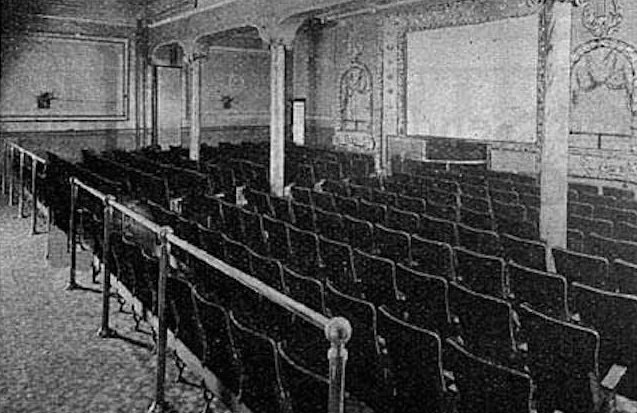
Before the TV network that defined the childhood of every 90s kid, "nickelodeon" was a word for a motion-picture theater or a jukebox. "Nickelodeon" is composed of the elements "nickel" (like the coin) and the Greek oideion, a type of roofed-over theater in which music was performed. Thus, one could pay a nickel to see… Continue reading Movies, Jukeboxes, and Demons: The Etymology of “Nickelodeon”
If You Are “Ravenous,” You Aren’t Like a Raven
It occurred to me the other day that ravens, while mischievous and intelligent, aren't terribly well-known for having enormous appetites. So wherefore "ravenous"? Turns out it's actually related to "ravine," as in the geographical feature—a deep, narrow gorge. "Ravenous" originally meant "extremely greedy" or "obsessed with plundering" in the 14th century, and was later figuratively… Continue reading If You Are “Ravenous,” You Aren’t Like a Raven
The Etymology of “Kaleidoscope”
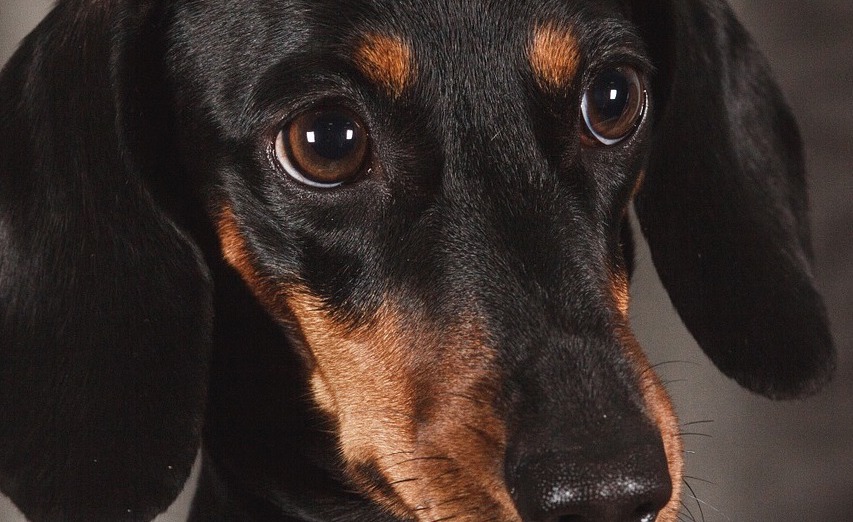
The Etymology of Dog Breed Names [Infographic]
The SUUPER interesting etymologies of the words “sarcastic” and “sardonic.” 🙄
Sarcastic and sardonic are similar, but not precisely the same, in meaning. Sarcastic: "marked by or given to using irony in order to mock or convey contempt." Sardonic: "characterized by bitter or scornful derision; mocking; cynical; sneering: a sardonic grin." The core factor in sarcasm is verbal irony—essentially saying the opposite of what you mean.… Continue reading The SUUPER interesting etymologies of the words “sarcastic” and “sardonic.” 🙄
8 English Words That Come from Yiddish
I was today years old when I learned that these English words are—or come from—Yiddish. Other people who are smarter or more Jewish than me probably knew the Yiddish origins of many of them, but color me ignorant. Here's hoping one of them surprises you as much as it did me. L'Chaim! "Maven," an expert… Continue reading 8 English Words That Come from Yiddish