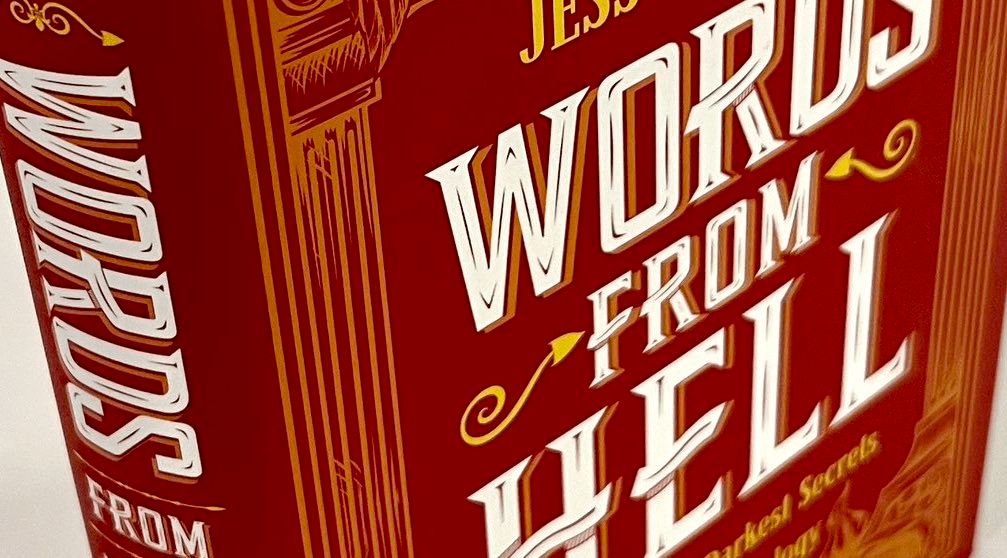
Plus, 5 haunting etymology facts to celebrate the book's Halloween release. Something wicked—and wordy—this way comes. Today, Oct. 31, 2023, a book brimming with festering filth and malicious monstrosities claws its way from the darkest recesses of human imagination. And it's nerdy as fuck. Meet Words from Hell by Jess Zafarris. (That's me, your guardian… Continue reading ‘Words From Hell’ Emerges from the UnderWord, Exposing Etymology Horrors for All to See
Author: Jess Zafarris
The Shocking Etymology of “Taser,” and the Racism Hidden Behind It
Note: This is an extended excerpt from my forthcoming book Words from Hell: Unearthing the darkest secrets of English etymology (Chambers, Oct. 31, 2023). It may be common knowledge that laser (or L.A.S.E.R.) is an acronym of "light amplification by stimulated emission of radiation." It was coined around 1960 and modeled after the slightly ealier term maser… Continue reading The Shocking Etymology of “Taser,” and the Racism Hidden Behind It
Avast! 6 Swashbuckling Word Origins for International Talk Like a Pirate Day
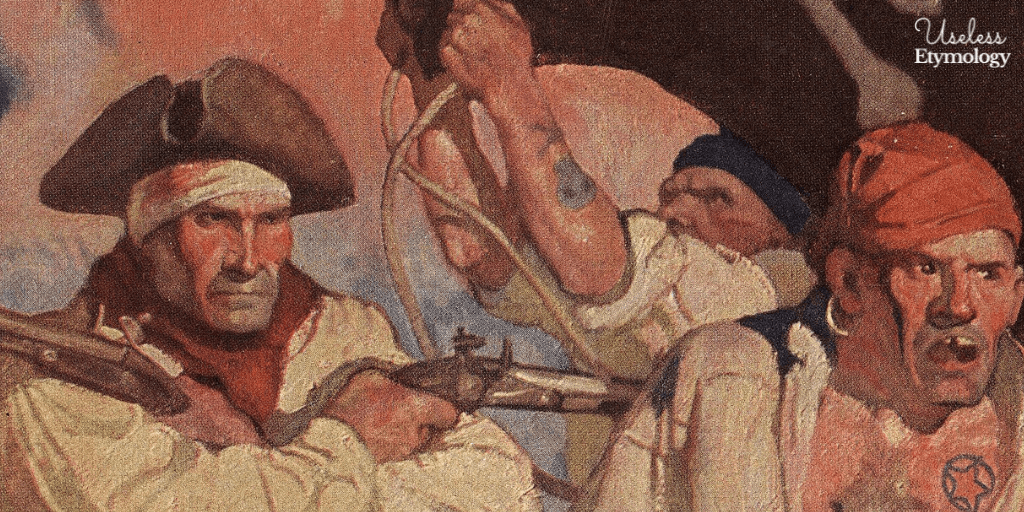
Note: This is an excerpt from my forthcoming book Words from Hell: Unearthing the darkest secrets of English etymology (Chambers, 2023). In honor of International Talk Like a Pirate Day, let's explore the origins of a few piratey terms—albeit fictional ones, in many cases. Many of the terms and phrases we associate with pirates were not recorded… Continue reading Avast! 6 Swashbuckling Word Origins for International Talk Like a Pirate Day
Not Quite What You Meant: The Difference Between Eggcorns and Malapropisms
Eggcorns and malapropisms: These are both terms for vocabulary faux pas — essentially an incorrect word that sounds similar to the intended word. But each of these terms involves a distinguishing factor that sets it apart. Malapropisms With malapropisms, the mistaken word is blatantly incorrect, it doesn't sense in context, and it’s funny or absurd… Continue reading Not Quite What You Meant: The Difference Between Eggcorns and Malapropisms
The Etymology of “Spinster” and Its Gendered Ending
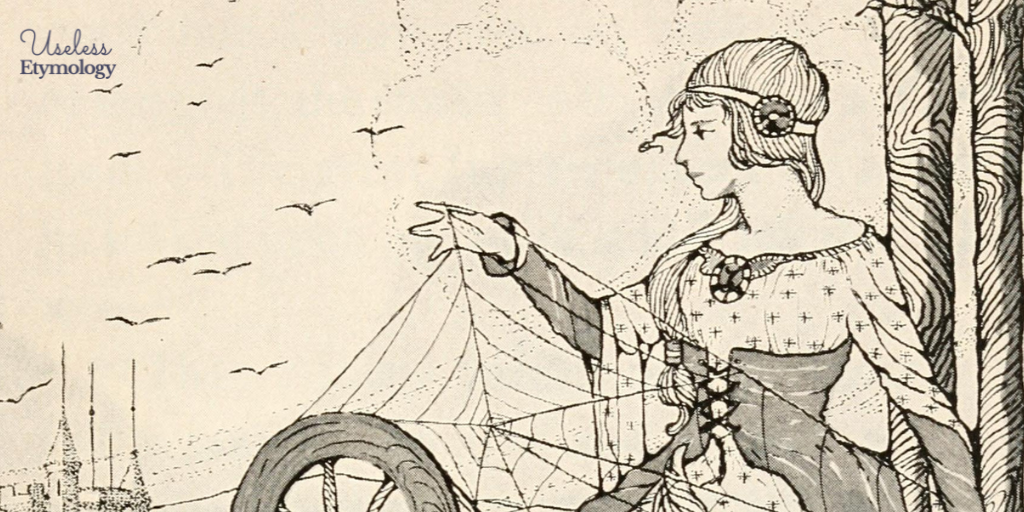
Have you ever wondered why unmarried women over a certain age have historically been called spinsters? Originally a word for a woman who spins thread for a living, “spinster” is structured in the same way as words like “trickster” or “gangster”—it’s the word “spin” with an agent noun ending. But the latter two words are… Continue reading The Etymology of “Spinster” and Its Gendered Ending
The Word “Outrage” Technically Doesn’t Include “Out” or “Rage”
Note: This is an excerpt from my forthcoming book Words from Hell: Unearthing the darkest secrets of English etymology (Chambers, 2023). Want to know something outrageous? The word “outrage” isn’t etymologically related to the words “out” or “rage.” It has completely different roots. It technically does not even contain the words “out” or “rage.” In fact, it’s… Continue reading The Word “Outrage” Technically Doesn’t Include “Out” or “Rage”
6 Fancy Words for Sexy Things
In my forthcoming book Words from Hell (Chambers 2023), I spend a hefty chapter exploring the origins of all things erotic and naughty. The following excerpt from the book explores some entertaining and enticing terms that you may not have previously encountered—and even if you have, you may enjoy learning about their titillating origins. Bathukolpian… Continue reading 6 Fancy Words for Sexy Things
“Shark” Was a Word for a Terrible Person Before It Was the Name of the Animal
Note: This is an excerpt from my forthcoming book Words from Hell: Unearthing the darkest secrets of English etymology (Chambers, 2023). Sharks were named after terrible people. That’s right. “Shark” was a word for a human before it was a word for a fish. Old English didn’t have a general word for the broad group of… Continue reading “Shark” Was a Word for a Terrible Person Before It Was the Name of the Animal
The Word “Blackmail” Has Nothing to Do With Mail
Note: This is an excerpt from my forthcoming book Words from Hell: Unearthing the darkest secrets of English etymology (Chambers, 2023). Here's a mindbending etymology fact for you: The word “blackmail” originally had nothing to do with mail as in letters, or for that matter, anything else we’d call mail today. In the 1500s and extending… Continue reading The Word “Blackmail” Has Nothing to Do With Mail