The Etymology of “Spinster” and Its Gendered Ending

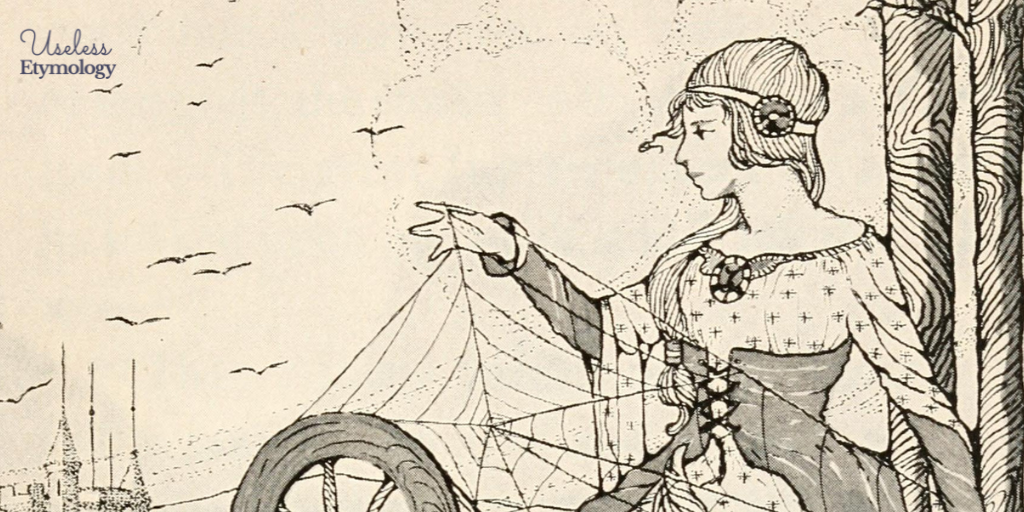
An illustration of a woman spinning a web on a spinning wheel. This is the header image for a post on the etymology of "spinster."

Have you ever wondered why unmarried women over a certain age have historically been called spinsters? Originally a word for a woman who spins thread for a living, “spinster” is structured in the same way as words like “trickster” or “gangster”—it’s the word “spin” with an agent noun ending.  But the latter two words are… Continue reading The Etymology of “Spinster” and Its Gendered Ending
The Word “Outrage” Technically Doesn’t Include “Out” or “Rage”

Note: This is an excerpt from my forthcoming book Words from Hell: Unearthing the darkest secrets of English etymology (Chambers, 2023). Want to know something outrageous? The word “outrage” isn’t etymologically related to the words “out” or “rage.” It has completely different roots. It technically does not even contain the words “out” or “rage.” In fact, it’s… Continue reading The Word “Outrage” Technically Doesn’t Include “Out” or “Rage”