

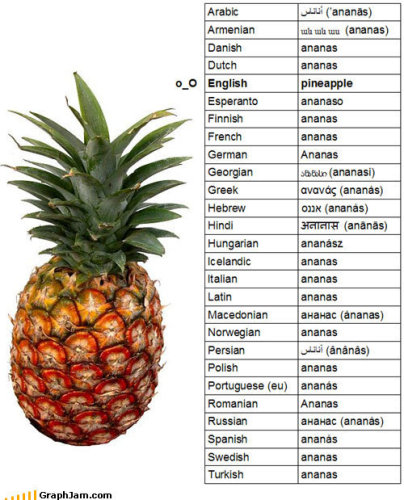
 English is one of the only European or Asian languages that doesn’t use a variation of the word “ananas” to mean pineapple.
In 14th-century English, the word “pineapple” was a word for a pine cone, which makes a lot of sense if you think about the way pinecones grow on conifers, much like apples on apple trees.
During the 1660s colonization of the Caribbean, English and Spanish colonists encountered these huge spiky fruits and thought they looked a bit like big pine cones. But while “pineapple” stuck for the fruit, it somewhat illogically failed to stick for conifer cones.
The same thing happened for Peninsular Spanish, with the word piña predominating for the same reasons as the English word.
But apparently the resemblance between pine cones and pineapples didn’t make much of an impression on other languages, including other varieties of Spanish, which adopted the Guarani (Paraguayan) word ananas. Even the genus name for the plant species is Ananas.
To add a further identity crisis to the tragic saga of the underappreciated pine cone, in Old English, conifer cones were also known as pinhnytes or pine nuts.
Discover more from Useless Etymology
Subscribe to get the latest posts sent to your email.

I always felt English was trying to differentiate “ananas” from bananas. It would be odd to have two fruit-ish items that sound so much alike where neither of them look nor taste similar to each other. Imagine someone discovered a new fruit in the desert southwest and decided to call it a gapple.
LikeLike